A freight emissions total is only useful when the business understands what sits inside it. For an Indian manufacturer using several transport contractors, a purchase ledger alone cannot explain which journeys, transfers and storage activities produced the reported footprint. The first task is to describe the physical network and connect it to commercial responsibilities.
The GHG Protocol provides separate guidance for transportation and distribution within its value chain accounting framework. Applying that framework to a particular company requires attention to its contracts and accounting boundary. This article offers an operational starting point, rather than a substitute for reviewing the relevant methodology.
Build a journey register
Start with a representative movement from supplier to customer. Record its origin, destination, transport legs, intermediate handling and storage. Then identify who arranges each activity, who pays for it and who holds the underlying records. A subcontracted vehicle should remain visible even when its invoice arrives through a larger logistics provider.
Use that journey to design a register for the wider network. Give each movement a stable identifier and attach weight, distance, transport mode and reporting period where available. Mark missing fields explicitly. An empty cell should mean that information is absent, rather than quietly implying that an activity produced no emissions.
Facilities deserve their own review. A dispatch warehouse, a leased distribution centre and a carrier’s hub may sit under different arrangements. Ask which accounting treatment applies before adding facility electricity to transport data. Otherwise, teams can include the same energy twice or exclude it because every participant assumes another party has counted it.
Make the boundary usable
Document decisions in language an operations manager can follow. Explain how returns, repositioning, international legs and outsourced storage are treated. Keep a record of exclusions with reasons and a plan for improvement. A short boundary note attached to every reporting cycle is more practical than an unexplained headline total.
The register can also improve purchasing. Once gaps are visible, a shipper can ask carriers for specific records instead of a generic sustainability certificate. Procurement can place data requirements alongside delivery requirements, giving suppliers a predictable request and a way to correct errors.
Do not confuse a cleaner dataset with a cleaner operation. Better coverage may raise the reported total by revealing activities previously omitted. Present that change separately from genuine operational reductions. A defensible first inventory should establish what the business knows, what it estimates and what decisions the information can support.
Sources
- Scope 3 Calculation Guidance Source accessed 2026-10-13.
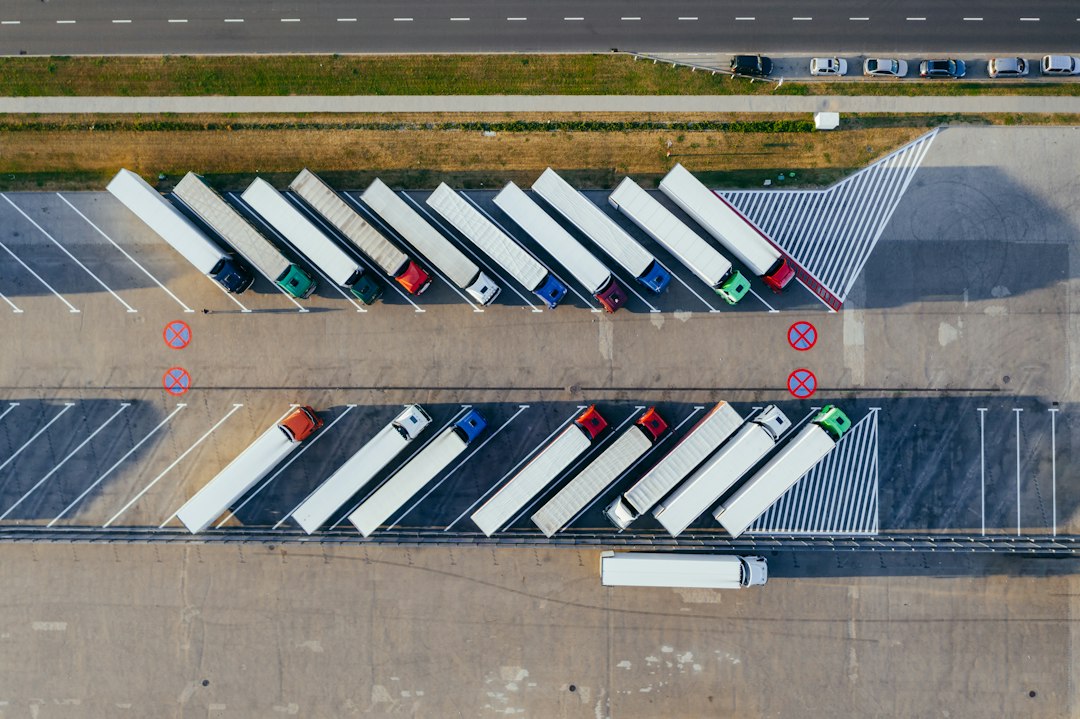
Illustrative photograph: Marcel Strauß / Unsplash.